
Just three months after the Ninth Congress of the Workers’ Party of Korea (WPK), the DPRK is reporting impressive early achievements in implementing its new Five-Year Plan. According to the Korean Central News Agency (KCNA), the country’s industrial sector recorded a 5 percent increase in overall output during the first 100 days following the Party Congress, reflecting what the agency describes as a vigorous mass technical innovation movement.
The new development strategy, outlined by the Marshal Kim Jong Un at the Ninth WPK Congress, places emphasis on boosting overall socialist development through self-reliance and scientific and technological advancement. It is also rooted in confidence in the Korean working people, who have demonstrated their strength through many decades of remarkable achievements. KCNA reports that this approach has generated strong momentum from the outset, with numerous factories, mines, power stations, transport enterprises, and other units across the economy exceeding their planned targets.
Very strong performances have come from the construction materials industry. The Sangwon Cement Complex achieved an average of 107 percent of its daily production target in March and successfully met its ambitious goals throughout April and May. The Sunchon Cement Complex produced tens of thousands of additional tons of cement during the first 100 days of the plan, while cement producers nationwide collectively exceeded their planned output, providing increased supplies for construction projects across the country.
Coal production has also expanded. Workers at the Chonsong Youth Coal Mine increased production by six percent compared to the same period last year. At the February 8 Jikdong Youth Coal Mine, various workplace innovation campaigns enabled miners to produce well over a thousand additional tons of coal beyond the monthly target in May alone.
Mining enterprises supplying the country’s steel industry likewise reported positive results. The Musan Mining Complex over-fulfilled its production plans of concentrated iron ore for three consecutive months, while the Unnyul Mine’s technicians strengthened its capacity to increase iron ore and concentrated ore production.
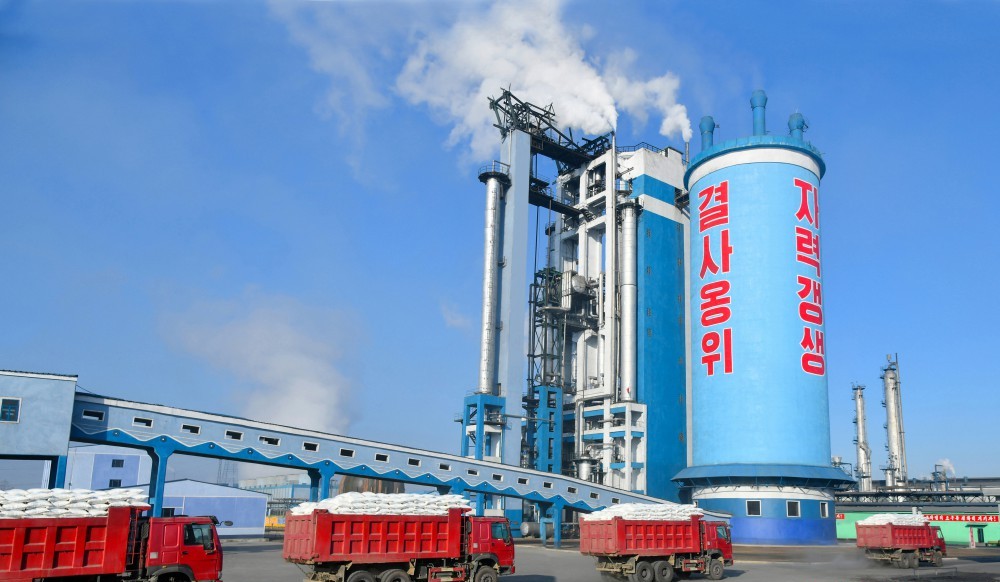
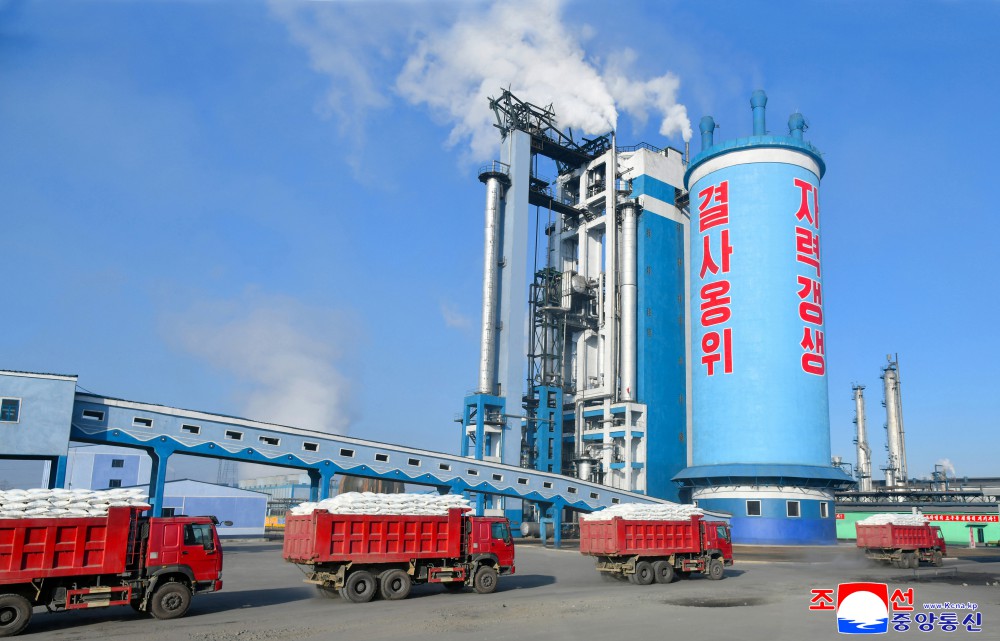
The chemical industry has focused strongly on technological innovation. At the Namhung Youth Chemical Complex, engineers and workers introduced original technical inventions that enabled the plant to surpass its fertilizer production goals. The Hungnam Fertilizer Complex also exceeded its planned output by well over a thousand tons through improvements in operating methods and technical measures that increased gas production efficiency.
The power sector has also benefited from engineering improvements. The Pukchang Thermal Power Complex introduced new boiler technologies using far-infrared heating elements, increasing combustion efficiency while reducing coal consumption. Suphung, Jangjingang and Sodusu power stations also reported higher electricity generation through improved water management and more efficient operation of generating equipment.
The country’s machinery industry has concentrated on modernizing equipment through large-scale technical innovation campaigns. The Pyongyang Electric Cable General Factory 326 has made innovations in the production of various types of high-quality electric cables through technical upgrades to its plastic mixers, rolling mills, large-size elongation machines and other equipment. Meanwhile, the Anju Insulating Material Factory has boosted the production of paints and insulating materials by ensuring the efficient operation of its existing production lines, strengthening its technical capabilities and modernizing its insulating varnish production process.
The mining and light industries also conducted a mass technological innovation movement, giving importance to science and technology and introducing incentives to encourage working people to develop their technical knowledge and professional skills.
Railway workers, timber producers and fishery workers have all met their monthly targets for rail freight, timber production and seafood production.
The report emphasizes that the determined efforts of the DPRK’s heroic working class during the opening phase of the new Five-Year Plan have produced industrial growth well above planned levels, establishing a solid foundation for steady and sustained growth of the country’s economy.
While in today’s world many countries continue to face economic uncertainty, the early results of the DPRK’s Five-Year Plan seem to present clear evidence of the effectiveness of its development strategy centered on domestic industrial capacity, technological innovation, and the coordinated mobilization of national resources.